The thyroid is a small, butterfly-shaped gland located at the base of the neck. Despite its size, it plays a vital role in regulating the body’s metabolism, energy levels, heart rate, and temperature. When the thyroid doesn’t function properly, it leads to a group of conditions collectively known as thyroid disease. These disorders can affect people of all ages and are especially common among women.
Early detection and appropriate treatment are key to managing thyroid diseases effectively. Let’s explore the different types, symptoms, causes, and treatment options for thyroid conditions.
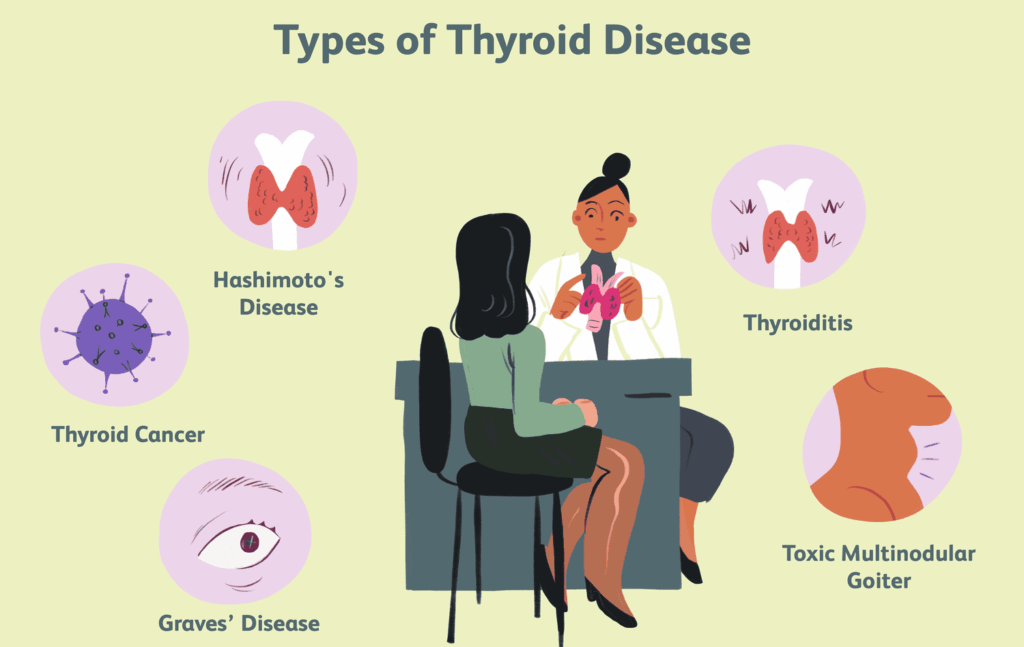
Types of Thyroid Diseases
- Hypothyroidism: The thyroid gland is underactive and doesn’t produce enough hormones.
- Hyperthyroidism: The thyroid is overactive, producing excess hormones.
- Goiter: An enlargement of the thyroid gland.
- Thyroid Nodules: Lumps that develop in the thyroid; most are benign, but some may be cancerous.
- Thyroid Cancer: A rare but serious condition where malignant cells form in the thyroid tissue.
- Hashimoto’s Thyroiditis: An autoimmune disorder leading to hypothyroidism.
- Graves’ Disease: An autoimmune disorder causing hyperthyroidism.