
Normal Blood Sugar Levels by Age: A Complete Chart and Guide
- By orchid
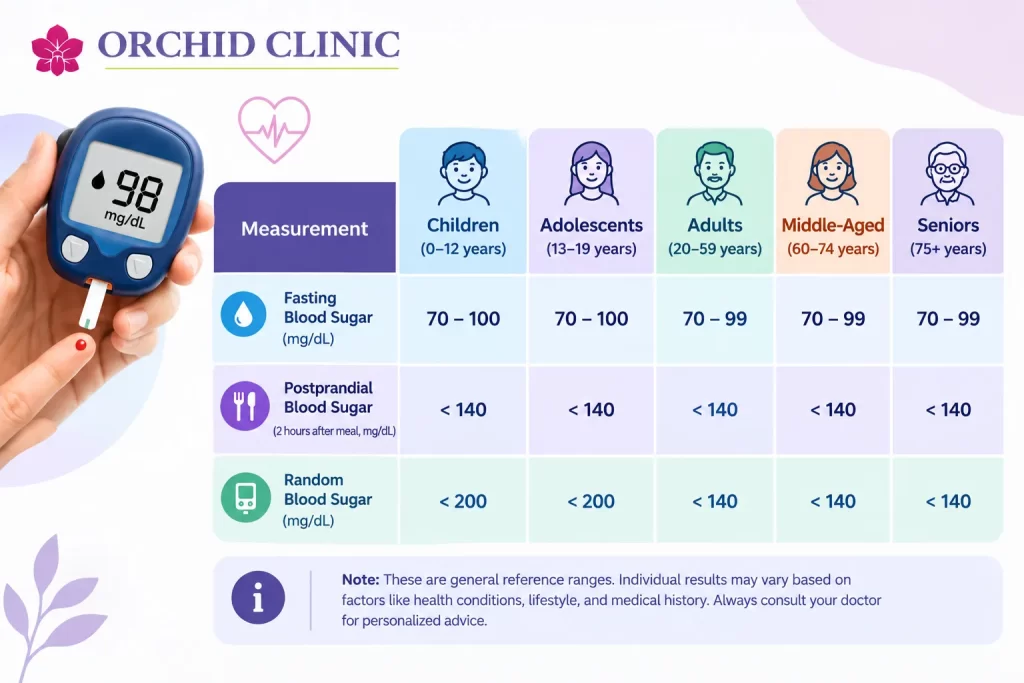
Blood sugar, also called blood glucose, is an important indicator of overall health. But what is considered a normal blood sugar level by age? Understanding healthy glucose ranges can help you recognize when your blood sugar may need attention.
Blood sugar targets can vary depending on whether you are fasting, after eating, or managing diabetes. Here’s a simple guide to help you understand the numbers.
Normal Blood Sugar Levels by Age
There isn’t one single blood sugar range that applies to everyone. Age, health conditions, medications, and whether you have diabetes can all affect recommended targets.
|
Age Group |
Typical Fasting Blood Sugar* |
|
Children |
70–99 mg/dL |
|
Teenagers |
70–99 mg/dL |
|
Adults |
70–99 mg/dL |
|
Older Adults |
70–99 mg/dL |
*For people without diabetes, a fasting blood glucose level of 70–99 mg/dL is generally considered normal.
For people with diabetes, individualized blood sugar targets may be different and should be discussed with a healthcare professional.
What Is a Normal Blood Sugar Level?
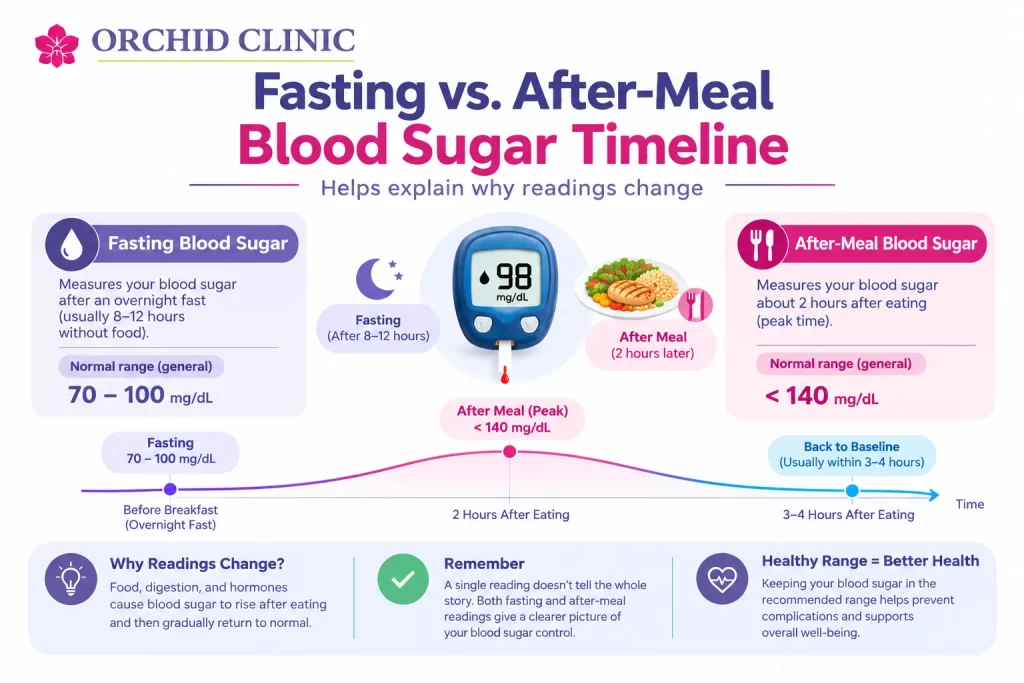
Blood glucose changes throughout the day. A fasting test is usually taken after not eating for at least 8 hours, while a post-meal reading measures blood sugar after eating.
For adults without diabetes, general fasting categories are:
- Normal: Below 100 mg/dL
- Prediabetes: 100–125 mg/dL
- Diabetes range: 126 mg/dL or higher
A diabetes diagnosis usually requires confirmation with appropriate testing rather than relying on one result alone.
Does Blood Sugar Change With Age?
Age itself does not necessarily mean that a person without diabetes should have a higher fasting blood sugar level. However, older adults may have different treatment goals if they have diabetes, particularly when other health conditions or medications are involved.
That’s why blood sugar targets should be personalized rather than based on age alone.
When Should You Check Your Blood Sugar?
If you have diabetes, your healthcare professional may recommend checking your blood glucose at specific times, such as before meals, after meals, or when you experience symptoms of high or low blood sugar.
If you don’t have diabetes but repeatedly get unusually high or low readings, speak with a healthcare professional for proper evaluation.
The Bottom Line
Knowing normal blood sugar levels by age can help you better understand your health, but there is no single number that fits every situation. Fasting, post-meal, and diabetes-related targets are different. If you’re concerned about your blood sugar results, discuss them with a qualified healthcare professional.
Note: Blood sugar targets can vary by individual. This article is for general education and should not replace personalized medical advice.
